

Travelers Aren’t Pulling Back - They’re Rebuilding the Trip Budget
Welcome back to Inside the Traveler Wallet! This week, we’re looking at Q1 2026 spending trends and what they tell us about traveler behavior. And there’s good news: Travelers are still spending.
Written By - Anna Blount
June 2026
Traveler spending increased 6.48% year-over-year in Q1, outpacing overall inflation and showing that people continue to prioritize travel. But while travelers are still putting dollars into the economy, they’re not spending the same way that they were a year ago.
Instead, they’re adjusting different parts of the trip to make the budget work.
One of the clearest examples comes from the Service Station category - in other words, gas purchases.
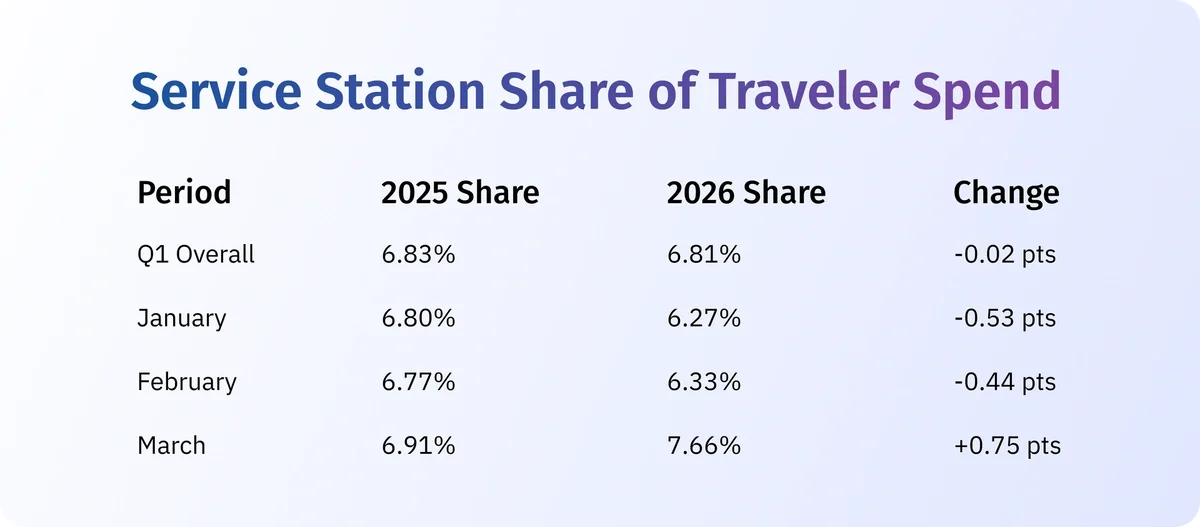
While service stations represented nearly the same share of traveler spending when looking at the quarter overall (6.83% in Q1 2025 vs. 6.81% in Q1 2026), March told a different story: Service station spending jumped from 6.91% of traveler spend in March 2025 to 7.66% in March 2026 - and this is the signal that destinations should watch.
Why does this matter? Fuel prices rose sharply following the outbreak of conflict in Iran, and our data shows those higher costs immediately taking a larger bite out of traveler budget. This increase in share-of-wallet does not simply indicate more road-trip activity - it shows that fuel costs are taking a larger chunk of the trip budget.
This matters for drive-market destinations. Travelers may still take the trip, but a sharp rise in the cost of getting there can influence how far they go, how long they stay, how many stops they make, and how much flexibility they have once they arrive. In other words: When getting there costs more, travelers will often look for ways to offset that expense elsewhere.
The big picture spend shifts we saw in Q1 tell the same story:
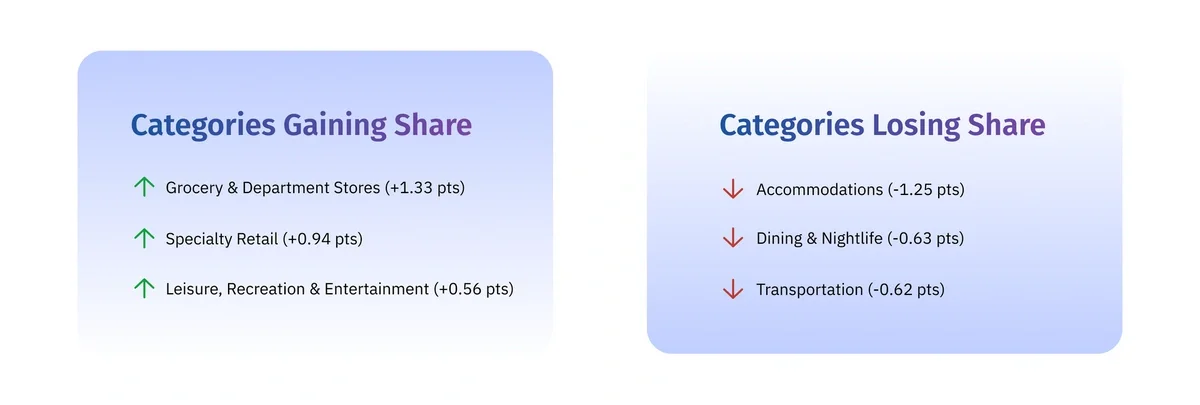
Increased spending in Grocery and Department Stores, combined with softer Dining and Nightlife spending, suggests visitors are building more flexibility into their budgets. They may still splurge on a memorable experience, but they’re balancing it with practical purchases along the way. The decline in Accommodations and Transportation point to more adjustments: Travelers may be choosing shorter stays, more affordable lodging options, or more carefully planning transportation once they arrive in the destination.
One thing that’s encouraging for DMOs: Leisure, Recreation and Entertainment continued to gain share: Travelers are still protecting the experiences that make the trip worthwhile, even as they look for savings in other areas.
Here’s the key takeaway:
Travelers are still saying yes to the trip. They’re simply making trade-offs to make it happen. For DMOs, that means leading with the experiences that motivate travel while helping visitors see ways to make the trip work within their budget.
What’s Next: We’ll be watching this Service Station trend closely in Q2. With a full quarter of post-conflict fuel pricing data, we’ll have a much clearer picture of how rising gas prices are influencing traveler behavior and spending decisions.
Interest in exploring traveler spending trends in your own market? Let’s connect.